Wordle!
Lion Studios PlusWord
4.515.89K Reviews
- Version
- 3.1.7
- Installs
- 10.00M
- Age Rating
- Everyone
Screenshots
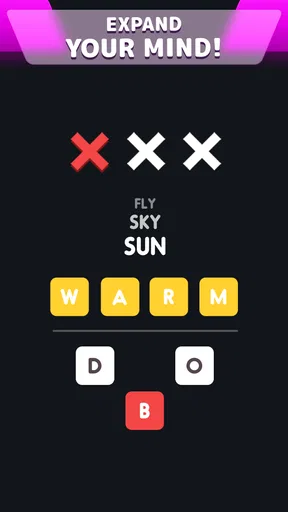
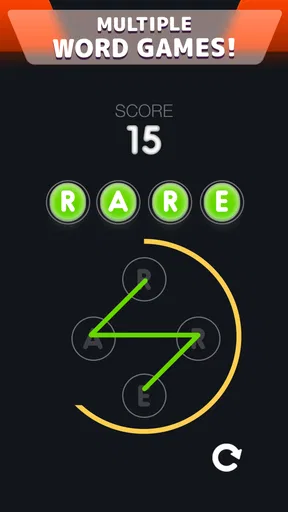
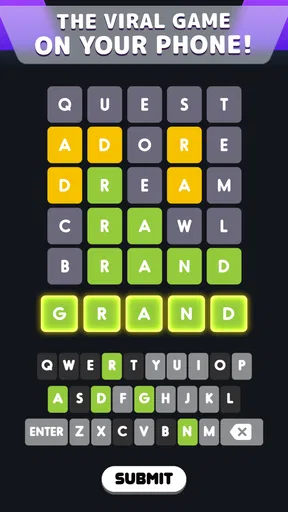
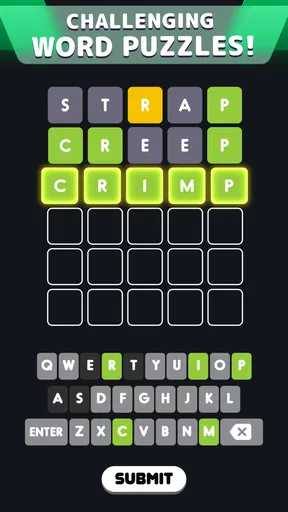
Our Review of Wordle!
 Analysis by Appyee
I like word games that fit into a real day rather than demanding a long session, and this one is built around that kind of quick pause. Wordle! is a free word game from Lion Studios Plus, aimed at anyone who enjoys teasing out a word from a few clues. Its daily-puzzle approach is easy to understand, but the fun comes from deciding what each result tells you and how to use that information on the next guess.
Cost and what you get
You can start playing without paying, which makes it easy to try as a short daily habit instead of a commitment. The game also offers in-app purchases priced from $0.99 to $99.99 per item. I’d treat that range as a reason to check any purchase screen carefully rather than assume you need to spend to enjoy the basic word-puzzle experience. If you only want a quick challenge, free access may be enough; whether any paid option feels worthwhile depends on what it offers and what you personally want from the game.
That distinction matters because a free download and a good fit are not quite the same thing. I’d begin with the free experience and see whether the daily format actually suits your routine before considering an optional purchase. The game is rated for Everyone, and its current version is 2.6.3, so it is presented as a broadly accessible puzzle rather than a niche word-game tool. It has a 4.1 average rating from around 178,000 ratings, which suggests many players have tried it, though a rating can’t tell you whether its pace and puzzle style match your taste.
Getting Started with the Craze
First things first, downloading Wordle! is a breeze. It’s available on both Android and iOS, so no matter your device preference, you’re covered. Once you’ve got it installed, you’re greeted by a simple, yet sleek interface. No unnecessary bells and whistles here, just a straightforward setup that gets you right into the action.
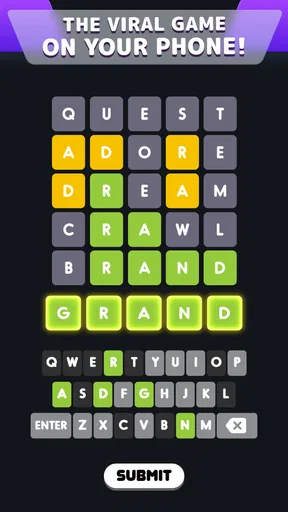
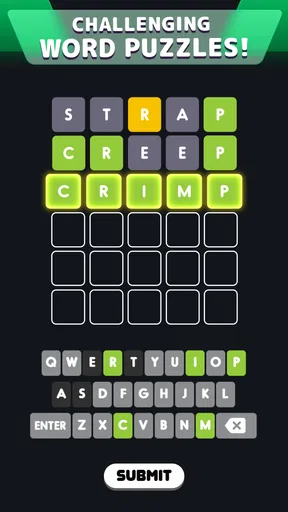
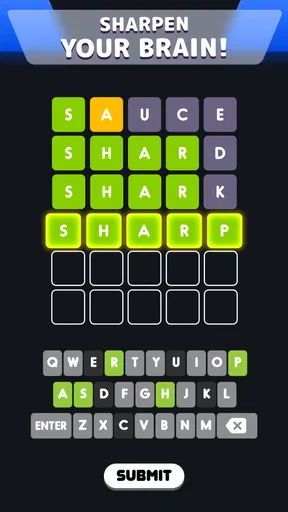
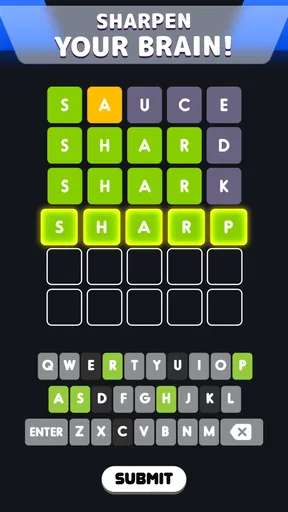
The game’s premise is pretty straightforward. You get six chances to guess a five-letter word. Sounds easy, right? Well, not so fast. Each guess provides feedback, with green squares indicating correct letters in the right position, and yellow squares showing correct letters in the wrong position. It’s like a mini brain workout every time you play!
The Joy of Simplicity
One of the things I absolutely love about this game is its simplicity. You don’t need to commit hours to enjoy it. You can sneak in a round or two during your coffee break, or unwind for a few minutes before bed. The minimalist design keeps distractions at bay, letting you focus purely on the puzzle.
There’s something incredibly satisfying about figuring out the word with just a few guesses left. It’s that "Eureka!" moment that keeps you coming back for more. Plus, with a new word every day, there’s always something fresh to challenge your brain.
Making a daily puzzle work for you
A daily format is best when you want a small, repeatable challenge, not an endless supply of levels. I’d use it as a deliberate break: open the puzzle between tasks, think through a guess, then stop when the day’s word is solved. That natural endpoint is useful if you’re trying not to lose half an hour to a game, but it can feel limiting when you’re in the mood to keep playing and immediately want another round.
One practical habit helps me get more from the feedback: after each guess, I pause before typing again and mentally separate letters I know belong in the answer from letters whose positions are now ruled out. It’s tempting to focus only on the green tiles, but a yellow letter is still useful information; it needs to move, not disappear from consideration. This small check makes guesses more purposeful and reduces the chance of repeating a failed arrangement.
I also avoid treating a familiar opening word as a guarantee of a good result. A starter can be handy for testing common letters, but if it produces little information, repeating the same style of guess may waste one of the limited attempts. I get better value by adapting: use the next guess to test several plausible letters or placements, then narrow down the answer. The game rewards attention to feedback more than a fixed ritual.
Social Vibes and Sharing
Now, let’s talk about one of my favorite features: sharing your results. After completing a puzzle, you can easily share your score with friends. It’s this little social twist that adds a layer of competition and camaraderie. I’ve found myself eagerly waiting to see how my friends fared, and it becomes a topic of conversation over group chats.
"Hey, did you get today’s Wordle? Took me five tries!"
It’s these moments that make the game not just a solo activity, but a shared experience that brings people together, even when apart.
Sharing without spoiling the fun
For a group chat, I’d share the result only after everyone who wants to solve the puzzle has had a chance to do it. The attraction is comparing how many tries people needed, not taking away the deduction itself. If your friends play at different times, a little restraint keeps the conversation welcoming to latecomers and stops a casual score message from becoming an accidental answer reveal.
The social side works best with people who enjoy comparing approaches rather than treating every result as a contest. A low number of guesses can be satisfying, but it doesn’t mean someone else had a worse time; an unusual word or a different first guess can change how quickly the clues come together. I like using the shared result as an invitation to talk about the reasoning, not as a ranking of who is cleverest.
How it compares with other word games
Compared with a crossword or a word-search puzzle, this is a much narrower kind of challenge. You are not scanning a grid for words or working through a set of clues; you are testing guesses and interpreting position feedback. That makes it easier to pick up in a short gap, while people who want a larger puzzle to explore at their own pace may find a crossword more satisfying.
It also differs from word games built around continuous rounds or long score-chasing sessions. Here, the daily rhythm and limited guesses are part of the appeal, but they also set a ceiling on how much you can play at once. If I want a quick shared talking point, this format is a good fit. If I want varied puzzles on demand, broader vocabulary practice, or a longer solo session, I’d choose a different word-game style instead.
There is a trade-off in the simple presentation, too. Less visual clutter keeps attention on letters and logic, but players who want richer modes, adjustable challenge, or more guidance may find the experience spare. The game’s store summary frames it around daily word-search puzzles, while the actual play described here is a five-letter deduction puzzle; either way, the appeal is focused word-solving rather than a broad collection of activities.
Room for Improvement?
No game is perfect, right? While I adore Wordle!, I do think there’s room for a few tweaks. For one, I’d love to see a hint system introduced. Sometimes, you’re just stuck, and a little nudge in the right direction could be a game-changer.
Another potential improvement could be a variety of difficulty levels. Maybe start with three-letter words for beginners and ramp up to more challenging six or seven-letter words for those who crave a bit more challenge. Just a thought!
When the format is not the right fit
The same restrictions that make a daily puzzle manageable can frustrate someone who wants immediate variety. If you hit a difficult word and would rather get a hint than reason through the clues, the lack of the hint system I’d like to see may make the experience feel stubborn rather than satisfying. And if you prefer a clear progression from beginner puzzles to harder ones, the fixed five-letter, six-guess setup may not give you the range you’re looking for.
It may also be a poor choice for someone who wants a word game to occupy a long commute or a full evening. A quick puzzle can be a welcome break, but it does not necessarily provide a stream of fresh rounds. I’d skip it in favor of a more open-ended alternative if your main goal is sustained play, a wide selection of puzzle types, or explicit teaching and hints.
Who is likely to get the most value?
I’d recommend it to casual players who like a small logic challenge, people who enjoy discussing puzzles with friends, and word-game fans who want a daily routine with a clear stopping point. It is also a reasonable first step for someone curious about letter deduction: the feedback after a guess gives you something concrete to work with, and the basic objective is quick to grasp.
For example, imagine you have a few minutes before a meeting. You can make a considered guess, use the colored feedback to plan another, and either finish the puzzle or leave the rest for later rather than committing to a long session. That is where the game’s compact rhythm feels genuinely useful. The reverse is true if you are waiting with time to spare and want a substantial challenge: one daily puzzle may feel over too soon.
The game has more than 10 million installs, and it runs on Android 7.0 or later. Those details make it clear that it has reached a broad audience and can work on a range of Android devices, but they do not change the central question for a new player: do you enjoy this particular daily guessing loop? I’d use the free access to answer that before spending anything.
The Verdict
In conclusion, Wordle! has quickly become one of my go-to games. Its blend of simplicity, challenge, and social interaction hits that sweet spot that keeps me engaged. Whether you’re a word nerd or just someone looking for a fun way to pass the time, I highly recommend giving it a shot.
So, what are you waiting for? Dive into the world of letters and see if you can crack today’s puzzle. Who knows, you might just become the next Wordle master among your friends!
Privacy and Permissions
See what permissions an app requests and how it handles your data.
- Wi-Fi connection information
- view Wi-Fi connections
- Other
- view network connections, full network access, control vibration, prevent device from sleeping, Google Play license check
Verdict
Strengths of Wordle!
- Simple, addictive gameplay.
- Enhances vocabulary skills.
- No ads or interruptions.
- Daily puzzles keep it fresh.
- Minimalist, user-friendly design.
Limitations of Wordle!
- Limited to one puzzle per day.
- No hints or help options.
- Lacks multiplayer feature.
- Repetitive for some players.
- Requires internet connection.
Other Releases by Lion Studios Plus
View All
Match 3D -Matching Puzzle Game
Puzzle4.5

Hexa Sort
Puzzle4.5

Point Out: Color Escape Puzzle
Puzzle4.6

Coin Sort
Casual4.4
Similar Picks in This Category
View All
Word Search - Word Puzzle Game
Bluetile4.8

Word Search Quest - Puzzles
Blackout Lab4.8

CodyCross: Crossword Puzzles
Fanatee, Inc.4.7

Words of Wonders: Crossword
Fugo Games4.9

Wordscapes: Word puzzle game
PeopleFun4.7

Word Search Explorer
PlaySimple Games4.9
Frequently Asked Questions
What is Wordle and how do you play it?
Wordle is a word puzzle game that challenges players to guess a five-letter word within six attempts. Each guess provides feedback in the form of colored tiles indicating correct letters and their positions. It's a simple yet engaging game that requires both vocabulary knowledge and strategic thinking.
Is Wordle available on both Android and iOS platforms?
Yes, Wordle is available for download on both Android and iOS devices. You can find it on the Google Play Store for Android users and the Apple App Store for iOS users. The game is free to download but may include optional in-app purchases or ads.
Does Wordle require an internet connection to play?
Wordle can be played both online and offline. An internet connection is necessary for downloading the app and accessing daily puzzles, but you can enjoy the game offline with previously downloaded puzzles. This flexibility makes it a great option for on-the-go entertainment.
Are there any in-app purchases in Wordle?
While the core game of Wordle is free to play, there may be optional in-app purchases available. These could include additional puzzle packs, ad removal, or hints to help with challenging words. However, the free version is fully functional and enjoyable on its own.
Is Wordle suitable for all age groups?
Wordle is designed to be accessible and enjoyable for a wide range of ages. Its simple mechanics and educational value make it suitable for both children and adults. However, younger players might need some assistance or supervision, as the game requires a basic understanding of word spelling and logic.
Play our best games!


